Summer is peak season for backyard barbecues, pool parties, and outdoor picnics. However, rising temperatures bring a sharp increase in food safety risks. According to the Centers for Disease Control and Prevention (CDC), food poisoning cases spike significantly during the summer months.
Bacteria like Salmonella, E. coli, Campylobacter, and Listeria thrive in warm, humid conditions. When perishable foods sit outside in the heat, these dangerous pathogens can double in number in just twenty minutes.
Understanding the differences between a mild stomach infection and severe foodborne illness is essential for protecting your family. By practicing safe food handling and recognizing the early warning signs of complications, you can keep your digestive health on track all season long.
Persistent bloating, acidity, or stomach pain? Consult Digestive & Liver Disease Consultants, P.A. today.
Why Food Safety Risks Increase in the Summer?
The correlation between warm weather and bacterial food poisoning comes down to basic microbiology and human behavior. Bacteria require warmth, moisture, and time to grow to dangerous levels. The hot ambient air of summer acts as an incubator for microbial growth on unprotected dishes.
Furthermore, cooking outdoors removes the controlled environment of a modern home kitchen. Without immediate access to running water for handwashing, separate counter spaces to prevent cross-contamination, or reliable refrigeration, the likelihood of consuming contaminated food rises.
Insects like flies and ants are also highly active during this time, serving as physical vectors that carry bacteria from external waste directly onto your buffet table.
Common Food Poisoning Symptoms to Watch For
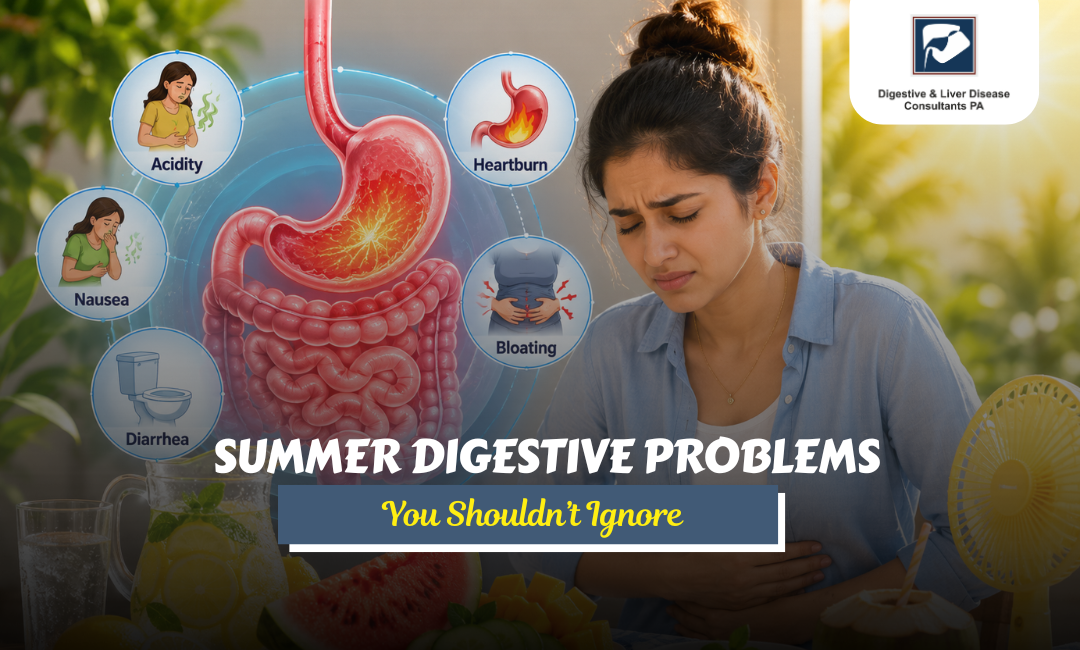
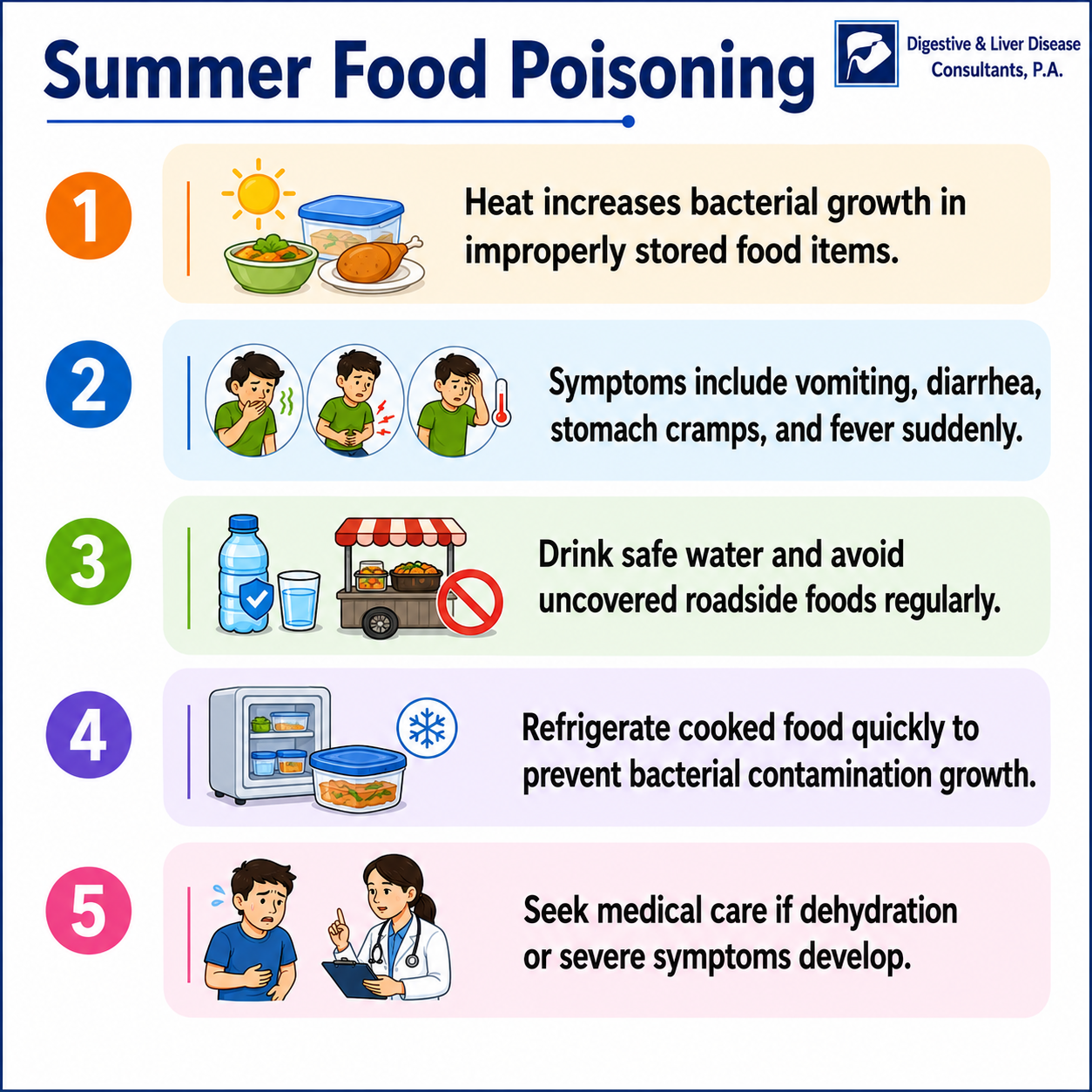
When you ingest food contaminated with harmful toxins or live bacteria, your gastrointestinal tract reacts promptly to eliminate the threat. The onset of digestive infection symptoms can vary wildly, appearing as quickly as thirty minutes or taking several days to manifest depending on the exact pathogen.
Severe Abdominal Cramping: The smooth muscles of your stomach and intestines contract forcefully to move toxins out of your body, resulting in sharp, painful waves of cramping.
Persistent Vomiting and Diarrhea: These common vomiting and diarrhea causes are the body's primary defense mechanisms to purge dangerous microorganisms. The frequency can cause rapid physical exhaustion.
High Fever and Chills: A spiking body temperature indicates that your immune system has deployed white blood cells to combat a systemic or localized bacterial infection.
Nausea and Loss of Appetite: Intense nausea typically precedes vomiting, leaving the upper digestive tract temporarily unable to process any food or liquid.
Spotting the Danger Signs of Dehydration
The primary medical complication associated with summer stomach infections is severe dehydration from food poisoning. When your body loses massive amounts of fluids through vomiting and diarrhea, it also loses vital electrolytes like sodium, potassium, and magnesium that keep your heart, nerves, and muscles functioning normally.
- Extreme, Unquenchable Thirst: Your body's urgent signal that total blood and fluid volume has dropped below safe operational thresholds.
- Dry Oral Cavity: A distinct lack of moisture in the mouth, accompanied by cracked, parched lips and sticky saliva.
- Dark-Colored Urine or Anuria: The kidneys conserve water by producing deeply concentrated, dark amber urine, or stopping urine production entirely for several hours.
- Dizziness and Postural Hypotension: A drop in blood volume lowers your blood pressure, causing a sudden rush of dizziness or lightheadedness when standing up quickly.
Practical Food Poisoning Prevention Tips
Protecting your household requires a proactive approach to food safety during summer. Implementing these evidence-based kitchen and grilling practices will dramatically reduce your risk of contracting a foodborne illness.
1. Master Hand and Surface Hygiene
Always wash your hands thoroughly with warm water and soap for twenty seconds before handling ingredients, after using the restroom, or after touching outdoor surfaces. If you are dining at a park or beach without access to running water, utilize an alcohol-based hand sanitizer with at least sixty percent alcohol content. Sanitize all cutting boards, knives, and countertops with hot, soapy water immediately after preparing raw proteins.
2. Stop Cross-Contamination Before It Starts
Keep raw meats, poultry, and seafood completely isolated from ready-to-eat foods like fresh fruits, salad greens, and buns. Utilize dedicated cutting boards for raw meats and never place cooked burgers or grilled chicken back onto the unwashed platter that held the raw product. Ensure your coolers are packed tightly so raw meat juices cannot drip onto other containers.
3. Use a Food Thermometer Constantly
Color and texture are completely unreliable indicators of whether meat is safe to eat. Always use a digital food thermometer to confirm that items have reached safe internal temperatures. Ground beef must be cooked to one hundred sixty degrees Fahrenheit, poultry to one hundred sixty-five degrees, and whole cuts of beef, pork, or lamb to one hundred forty-five degrees with a mandatory three-minute resting period to destroy hidden bacteria.
4. Enforce Safe Food Storage Practices
The foundational rule of summer food hygiene is the two-hour rule. Perishable food items must never sit out at room temperature for more than two hours. However, if the outdoor temperature is over ninety degrees Fahrenheit, that safety window drops to exactly one hour. Keep cold salads, deli meats, and condiments in insulated coolers packed with ice or frozen gel packs to keep the temperature below forty degrees Fahrenheit until the moment of consumption.
How to Treat Food Poisoning Safely at Home
Most mild cases of summer food poisoning resolve on their own within twenty-four to forty-eight hours with supportive care focused entirely on resting the digestive tract and replacing lost fluids.
Take Small, Frequent Sips of Electrolytes: Avoid drinking massive amounts of plain water rapidly, which can overstretch the stomach and trigger more vomiting. Instead, take small sips of oral rehydration solutions, diluted sports drinks, or clear broths every few minutes to rebuild your electrolyte balance.
Introduce Bland Foods Gradually: Once vomiting has ceased for several hours and your appetite returns, opt for easy-to-digest choices like the traditional BRAT diet (bananas, rice, applesauce, toast). Steer clear of dairy products, high-fat items, caffeine, alcohol, and heavily spiced foods until your digestive tract is completely stable.
Avoid Over-the-Counter Anti-Diarrheal Medications: Taking medications that stop diarrhea can actually prolong your illness. These drugs slow down natural intestinal motility, trapping the bacteria and toxic byproducts inside your colon for a longer duration. It is generally safer to let the infection clear naturally unless a physician explicitly tells you otherwise.
Why Choose Digestive & Liver Disease Consultants, P.A.
When acute gastrointestinal distress strikes, receiving timely care from a dedicated specialist is essential. At Digestive & Liver Disease Consultants, P.A., our team of board-certified gastroenterologists and hepatologists provides advanced, comprehensive care for all aspects of digestive health. We understand that severe food poisoning can be both physically draining and deeply concerning. Our clinicians excel at accurately diagnosing your condition, distinguishing between routine foodborne illnesses and more complex gastrointestinal infections or inflammatory disorders that require targeted prescription therapies.
Our state-of-the-art clinical facilities are fully equipped with cutting-edge diagnostic tools and advanced endoscopic technologies, allowing us to evaluate the health of your digestive tract with maximum precision. We prioritize patient comfort, open communication, and individualized treatment plans tailored to your specific health profile. Whether you need immediate medical support for severe dehydration, advanced diagnostic testing, or long-term management of chronic digestive issues, our specialists deliver the highest standard of compassionate, expert medical care you deserve.
Conclusion
While food poisoning is an incredibly common summer health hazard, it is highly preventable. By practicing strict food safety during summer, maintaining excellent hand hygiene, and implementing safe food storage practices at every outdoor event, you can keep your family safe from painful stomach infections.
Do not allow digestive complications to threaten your long-term health. Contact Digestive & Liver Disease Consultants, P.A. today to schedule a comprehensive evaluation with our best gastroenterology team and secure a personalized care plan that keeps your wellness first all year round.