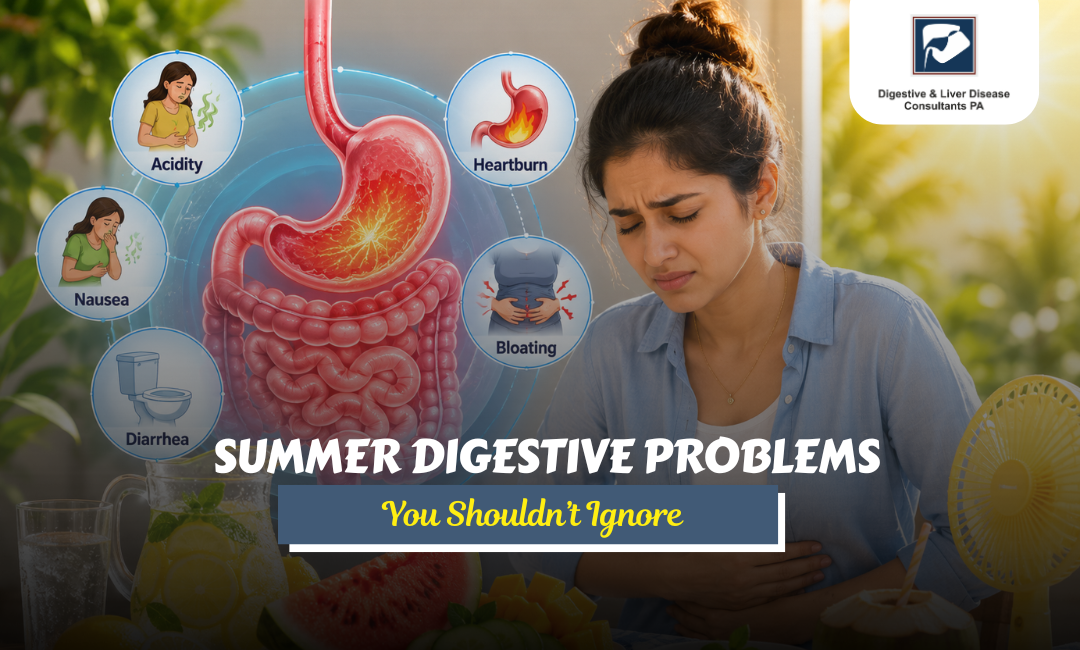
Do you find yourself feeling uncomfortably full, gassy, or swollen in the stomach area after nearly every meal? Constant bloating is one of the most widespread digestive complaints, yet it is one of the most misunderstood. While occasional bloating is normal, chronic or recurring bloating is your body sending a clear signal that your digestive health needs attention.
At Digestive & Liver Disease Consultants, P.A., our board-certified gastroenterologists help patients every day uncover the true causes of stomach bloating and build effective, lasting treatment plans. Here is what you need to know.
What Causes Constant Bloating?
Understanding the root cause is the first step toward real bloating relief. The most common causes include:
1. Foods That Trigger Gas and Bloating
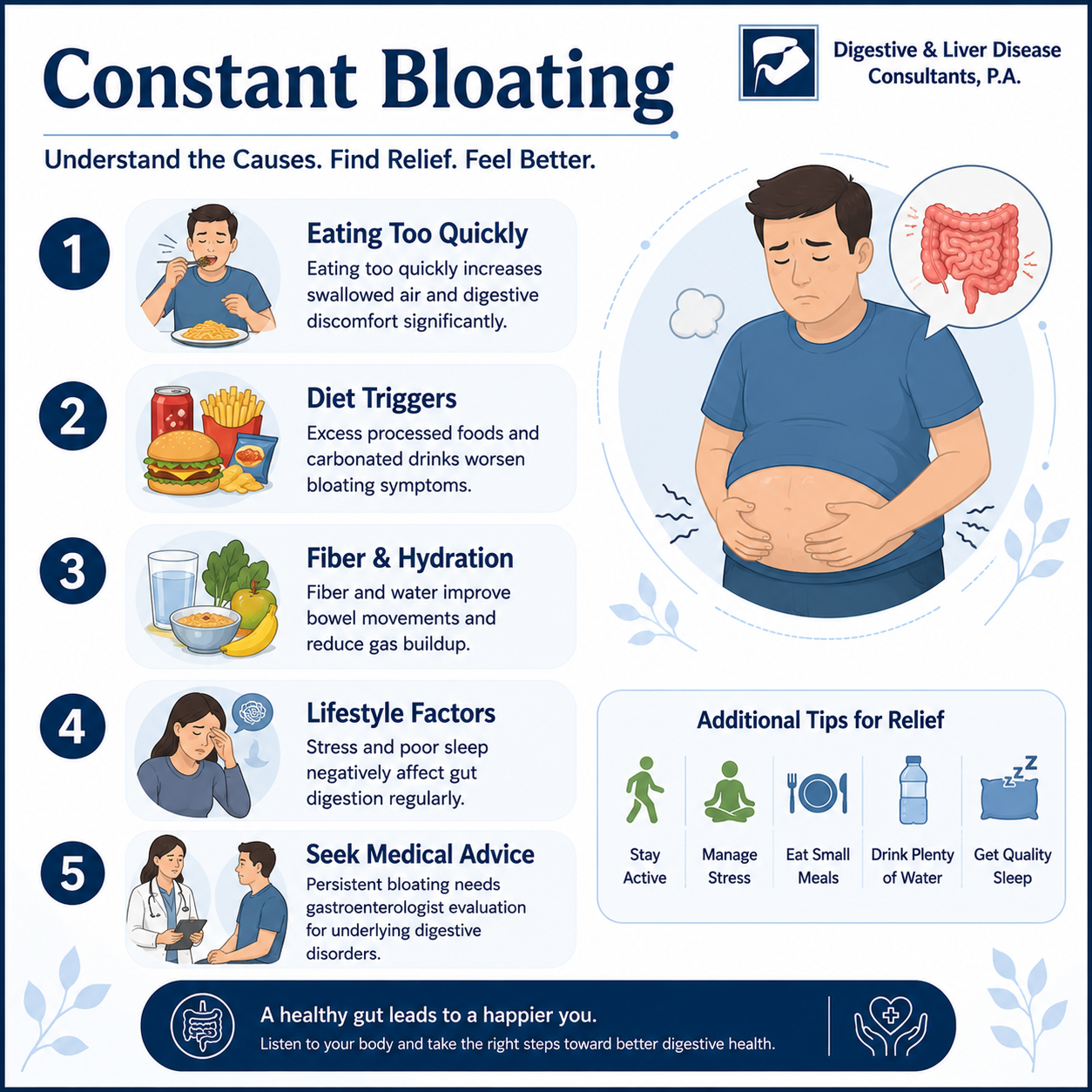
Certain foods produce excess gas during digestion. Beans, lentils, broccoli, onions, dairy products, carbonated drinks, and artificial sweeteners are frequent offenders. If you notice bloating after eating specific meals, keeping a food diary helps identify your personal triggers. Gut-friendly foods like ginger, fennel, and probiotic-rich yogurt can ease symptoms and support healthy digestion.
2. Eating Too Fast
Eating quickly or talking while chewing causes you to swallow excess air, which gets trapped in your digestive tract and leads directly to a bloated stomach. Slowing down at mealtimes and chewing food thoroughly is a simple but highly effective way to reduce bloating naturally.
3. Irritable Bowel Syndrome (IBS)
IBS is one of the leading causes of chronic bloating in adults. IBS symptoms typically include abdominal bloating, cramping, excess gas, and alternating constipation and diarrhea. The condition is closely linked to gut sensitivity, stress, and certain trigger foods. If your bloating is persistent and comes with changes in bowel habits, IBS deserves serious evaluation.
4. Food Intolerances
Lactose intolerance and gluten sensitivity are among the most common, and most frequently missed, causes of abdominal bloating. When your body cannot properly break down lactose or gluten, indigestion symptoms including gas, bloating, and discomfort follow quickly. Many patients are surprised to learn these intolerances can develop at any stage of life.
5. Constipation and Slow Digestion
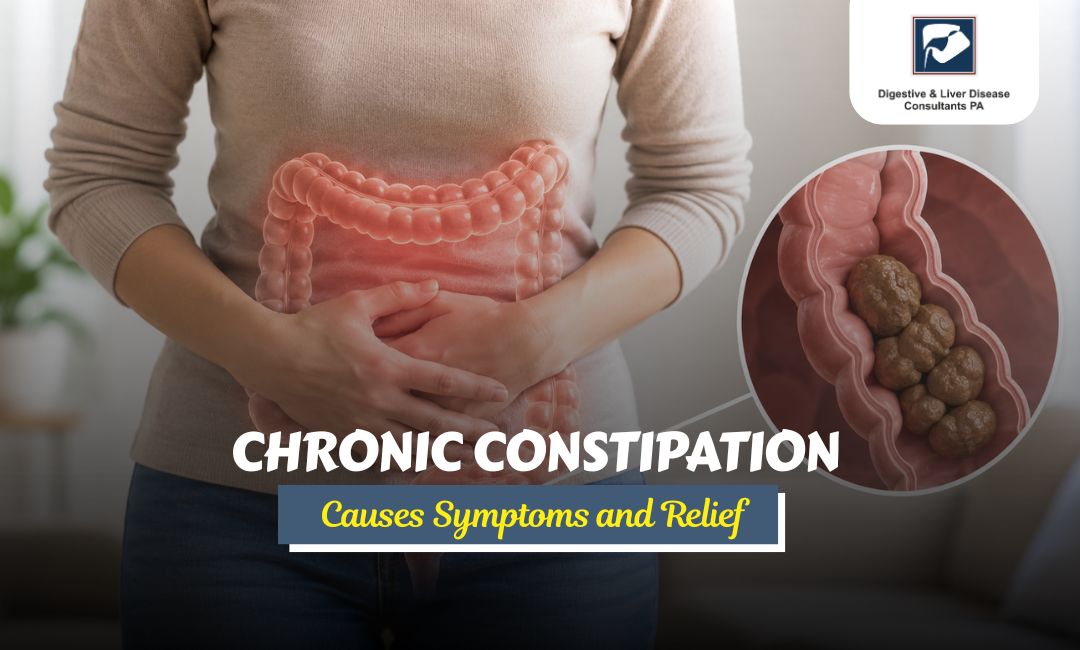
When waste moves too slowly through the gut, gas builds up and creates significant abdominal pressure. Chronic constipation is a direct and often overlooked driver of bloating. Increasing fiber intake, drinking more water, and staying physically active all support better gut motility and bloating prevention.
6. Stress and the Gut-Brain Connection
Your gut and brain are in constant communication. Stress slows digestion, heightens gut sensitivity, and disrupts the balance of bacteria in your digestive system. Managing stress through regular exercise, mindfulness, and quality sleep is a genuine and evidence-backed bloating remedy that many people overlook entirely.
Practical Tips to Reduce Bloating Naturally
Beyond identifying causes, these expert-recommended strategies support digestive wellness and deliver real relief:
Add Probiotics for Bloating Support: Probiotics help restore a healthy gut microbiome. Research supports their effectiveness for bloating tied to IBS and bacterial imbalances. Probiotic-rich foods like kefir, kimchi, and plain yogurt are excellent gut-friendly options to incorporate daily.
Limit High-FODMAP Foods: Fermentable carbohydrates found in apples, wheat, onions, and certain legumes are poorly absorbed in the gut and feed gas-producing bacteria. Reducing these foods during flare-ups can significantly ease stomach discomfort. A gastroenterologist can guide you through a proper elimination approach.
Stay Hydrated and Move Daily: Drinking adequate water helps fiber move efficiently through the digestive system. Even a short walk after meals has been shown to stimulate digestion and reduce post-meal bloating. These are simple habits that produce meaningful digestive health improvements over time.
Unhealthy Digestion Signs You Should Not Ignore
Occasional bloating is manageable at home, but certain signs call for professional digestive care right away. Seek evaluation if you experience bloating accompanied by unexplained weight loss, rectal bleeding, severe abdominal pain, persistent nausea, or fatigue. These may indicate underlying gastrointestinal conditions such as celiac disease, inflammatory bowel disease, or other serious issues requiring prompt diagnosis and bloating treatment.
Why Choose Digestive & Liver Disease Consultants, P.A.?
When it comes to gastrointestinal health, specialized expertise makes all the difference. Here is why patients trust us:
Advanced Diagnostics: We use colonoscopy, upper endoscopy, SIBO breath testing, and motility studies to identify the exact cause of your bloating rather than guessing.
Personalized Treatment Plans: Every patient receives a care plan tailored to their unique symptoms, history, and lifestyle because effective bloating management is never one-size-fits-all.
Expert Care for Complex Conditions: From IBS and SIBO to inflammatory bowel disease and liver conditions, our specialists handle both common and complex digestive issues with clinical precision.
Compassionate, Patient-Centered Environment: We understand that digestive symptoms can feel uncomfortable to discuss. Our team creates a welcoming, judgment-free space where patients feel genuinely heard and supported.
Conclusion
Constant bloating is not something you simply have to live with. Whether it stems from food intolerances, IBS, stress, or something more complex, real answers and effective bloating remedies exist. The key is moving from guesswork to an accurate diagnosis backed by expert gastrointestinal care.
Your gut health shapes how you feel, function, and live every day. You deserve better than ongoing stomach discomfort and unanswered questions.
Schedule Your Appointment Today
If chronic bloating or digestive discomfort is affecting your daily life, the GI specialists at Digestive & Liver Disease Consultants, P.A. are here to help. Contact us today to schedule your consultation, get a personalized diagnosis, and take the first step toward lasting digestive relief. Your gut health cannot wait.