Irritable Bowel Syndrome (IBS) is a complex functional gastrointestinal disorder that affects millions of people worldwide. If you live with IBS, you have likely received the age-old advice to "eat more fiber." However, for many patients, simply increasing fiber intake can lead to a frustrating paradox: while it may help some symptoms, it often triggers others like intense bloating, gas, and abdominal pain.
Finding the right balance of fiber is not about following a one-size-fits-all rule; it is about understanding how different types of fiber interact with your unique digestive system. At Digestive & Liver Disease Consultants, P.A., we believe that education is the first step toward effective symptom management.
Understanding the Role of Fiber in IBS
Fiber is a carbohydrate found in plant-based foods that the human body cannot fully digest. Unlike fats, proteins, or other carbs, fiber passes relatively intact through your stomach and small intestine and into your colon.
For those managing IBS, fiber serves two primary roles:
Bulking and Softening: It helps regulate stool consistency and transit time.
Prebiotic Function: It acts as a food source for beneficial gut bacteria, supporting overall gut health fiber IBS goals.
The challenge lies in the fact that fiber can be fermented by gut bacteria, producing gas. In a sensitive "IBS gut," this gas can cause stretching of the intestinal walls, leading to the characteristic pain and discomfort associated with the condition.
Soluble vs. Insoluble Fiber: Why the Difference Matters
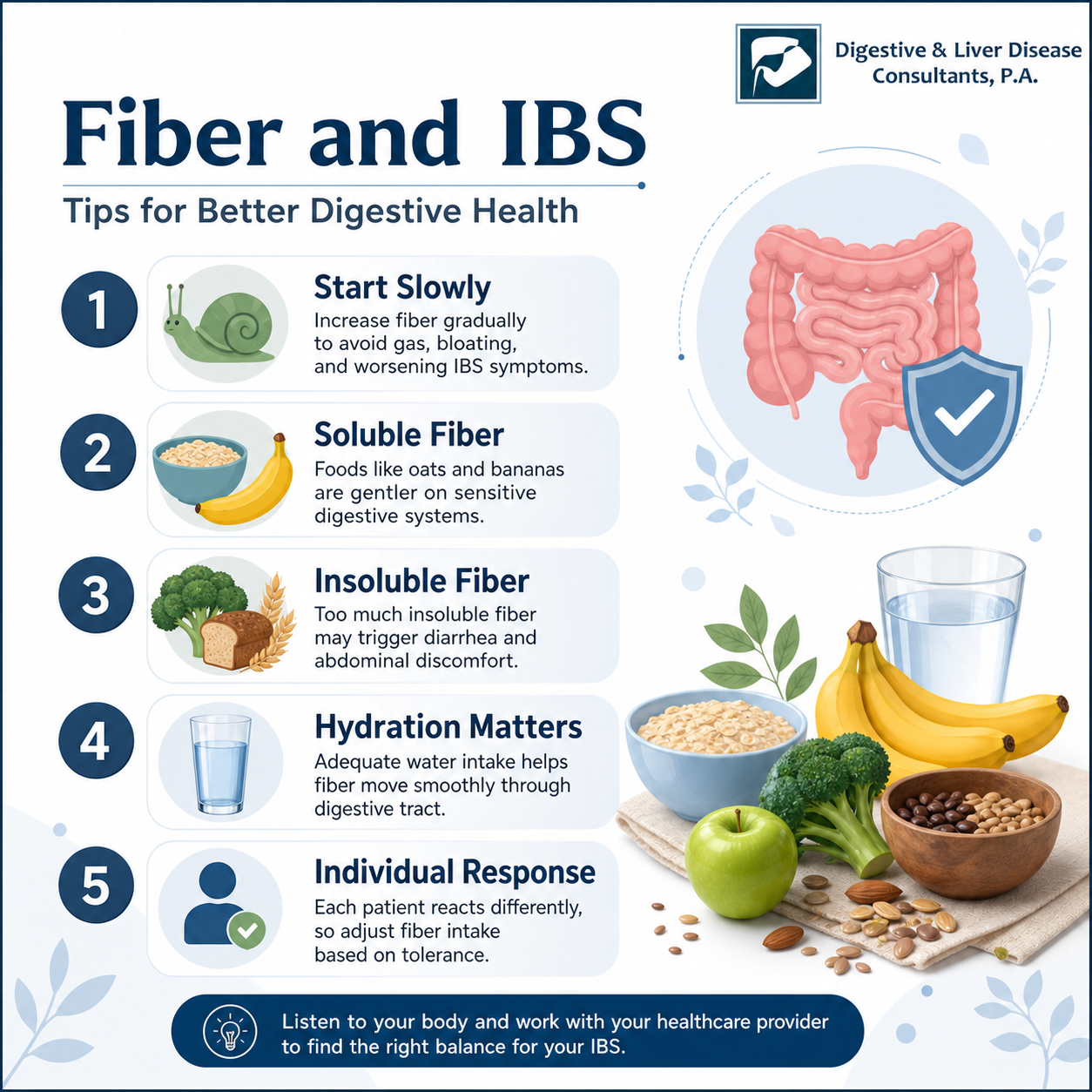
When discussing soluble vs insoluble fiber IBS patients need to know the distinct ways these fibers behave in the digestive tract.
Soluble Fiber: The IBS Ally
Soluble fiber dissolves in water to form a gel-like substance. It slows down digestion, which can be incredibly beneficial for those dealing with fiber for IBS diarrhea. By absorbing excess water, it helps firm up loose stools. Conversely, for those with fiber for IBS constipation, it keeps stools soft and easy to pass.
Best fiber for IBS sources (Soluble): Oats, carrots, peeled apples, and citrus fruits.
Insoluble Fiber: The Potential Trigger
Insoluble fiber does not dissolve in water. It adds "bulk" to the diet and acts like a broom, speeding up the passage of food through the gut. While this sounds helpful, for many with IBS, insoluble fiber can be too "rough," irritating the lining of the gut and worsening cramping or diarrhea.
Sources to monitor: Whole wheat flour, wheat bran, nuts, beans, and the skins of many vegetables.
Managing IBS with Diet: The Low FODMAP Approach
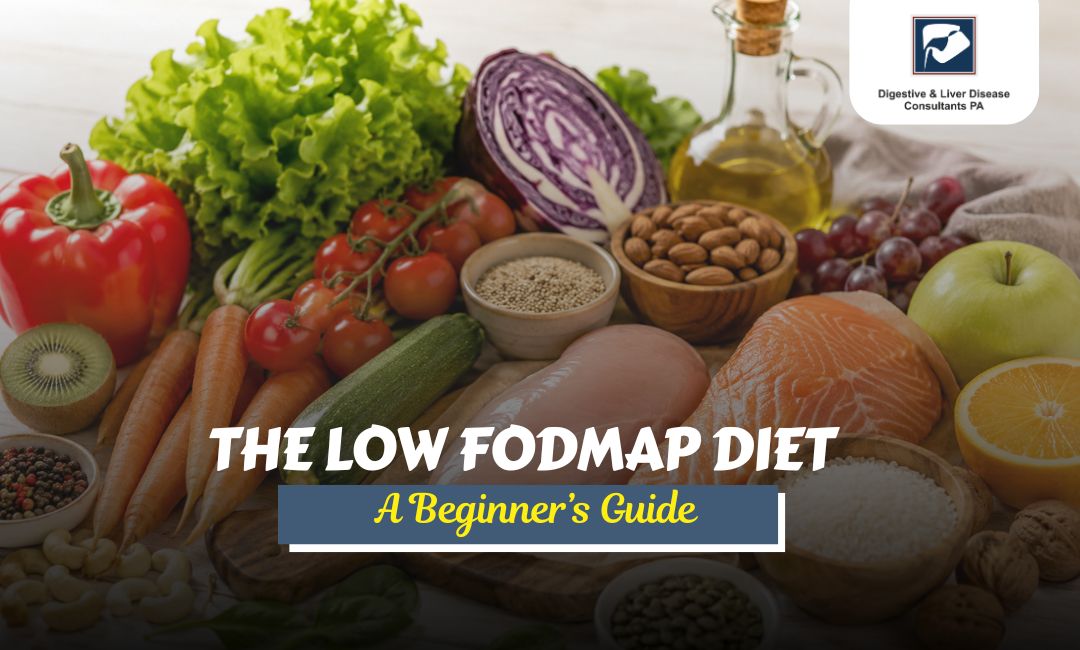
A crucial part of managing IBS with diet involves looking at FODMAPs (Fermentable Oligosaccharides, Disaccharides, Monosaccharides, and Polyols). Many high-fiber foods are also high in FODMAPs, which are poorly absorbed sugars that ferment rapidly in the colon.
To achieve the best low FODMAP fiber foods balance, consider these swaps:
- Instead of beans, try canned lentils (rinsed well) or firm tofu.
- Instead of wheat bread, opt for true sourdough or gluten-free options.
- Instead of apples or pears, choose strawberries, grapes, or kiwi.
Practical Tips for Increasing IBS Fiber Intake
If you are looking to improve your digestive health fiber intake without causing a flare-up, follow these clinical guidelines:
Start Low and Go Slow: Never double your fiber intake overnight. Introduce one new high-fiber food every few days. This allows your microbiome to adjust to the increased fermentation load, reducing IBS bloating fiber issues.
Hydration is Mandatory: Fiber works by pulling water into the colon. If you increase fiber without increasing water intake, you may end up with "concrete" stools, worsening constipation and pain.
Cook Your Vegetables: Raw vegetables contain tough cellulose fibers that are hard to break down. Steaming, roasting, or sautéing vegetables breaks down these fibers externally, making them much gentler on your digestive tract.
Remove Skins and Seeds: The highest concentration of insoluble fiber is often in the skin. Peeling your cucumbers, potatoes, and apples can make them much more tolerable.
Fiber Supplements and Psyllium Husk
Sometimes, it is difficult to get enough "gentle" fiber from food alone. This is where fiber supplements IBS come into play.
Psyllium husk IBS benefits are well-documented in clinical literature. Psyllium is a unique fiber because it is primarily soluble and non-fermentative. This means it provides the bulking benefits of fiber without producing the high levels of gas that lead to bloating. Many gastroenterologists recommend starting with a small dose of psyllium husk powder mixed in a full glass of water.
Determining How Much Fiber is Right for You
When asking how much fiber IBS patients should consume, the general recommendation for adults is between 25 to 35 grams per day. However, for an IBS patient, the "therapeutic window" might be different. Your doctor may recommend starting at 10 to 15 grams of primarily soluble fiber and gradually titrating up based on your symptomatic response.
Why Choose Digestive & Liver Disease Consultants, P.A.?
Managing IBS is a journey that requires more than just a list of "good" and "bad" foods. It requires a partnership with medical experts who understand the nuances of the brain-gut axis.
Digestive & Liver Disease Consultants, P.A. stands out as a premier choice for your gastrointestinal care for several reasons:
Specialized Expertise: Our board-certified gastroenterologists specialize in functional bowel disorders. We don't just treat symptoms; we look for the underlying triggers of your IBS.
Comprehensive Diagnostics: We utilize the latest diagnostic tools to rule out other conditions like Celiac disease, IBD, or SIBO (Small Intestinal Bacterial Overgrowth), which can often mimic IBS symptoms.
Personalized Nutrition Plans: We understand that every gut is different. Our team works with you to create a tailored fiber strategy that fits your lifestyle and specific IBS subtype (IBS-C, IBS-D, or IBS-M).
Advanced Treatment Options: Beyond dietary advice, we offer access to the latest FDA-approved medications and therapies for IBS management.
Patient-Centered Care: We prioritize listening. We know that IBS can be a frustrating and isolating condition, and we are dedicated to providing a supportive environment where your concerns are heard and addressed.
Conclusion
Finding the "sweet spot" for fiber intake is one of the most effective ways to regain control over your digestive health. By prioritizing soluble fiber, introducing changes gradually, and staying hydrated, you can enjoy the benefits of a high-fiber diet without the painful side effects. However, remember that dietary changes are most effective when guided by professional medical advice.
If you are struggling to manage your IBS symptoms or are unsure of the best path forward, do not navigate this alone. Expert guidance can help you distinguish between a healthy adjustment and a harmful flare-up.
Take Control of Your Gut Health Today
Stop guessing and start healing. Schedule a consultation with the our best GI experts at Digestive & Liver Disease Consultants, P.A. to develop a personalized plan for managing your IBS.
Contact us today to book your appointment and take the first step toward a more comfortable, symptom-free life.